A dashboard loan agents actually want to open.
Client
Cashare AG
Year
2025
Cashare's loan agents were juggling clients, projects, and contracts across too many tabs. I designed them one place to do all of it. Brokered volume up top, repayments below, customers a click away. Quiet where it needs to be, useful everywhere else.
Scope of Work

The Agent Portal
When Cashare brought me in, their loan agents were doing real work in fake conditions. Spreadsheets here, emails there, a CRM that nobody loved, and a website that wasn't built for the people actually closing loans. Everyone was getting the job done, but the job was harder than it needed to be.
So we started over. Not the company, just the workspace.
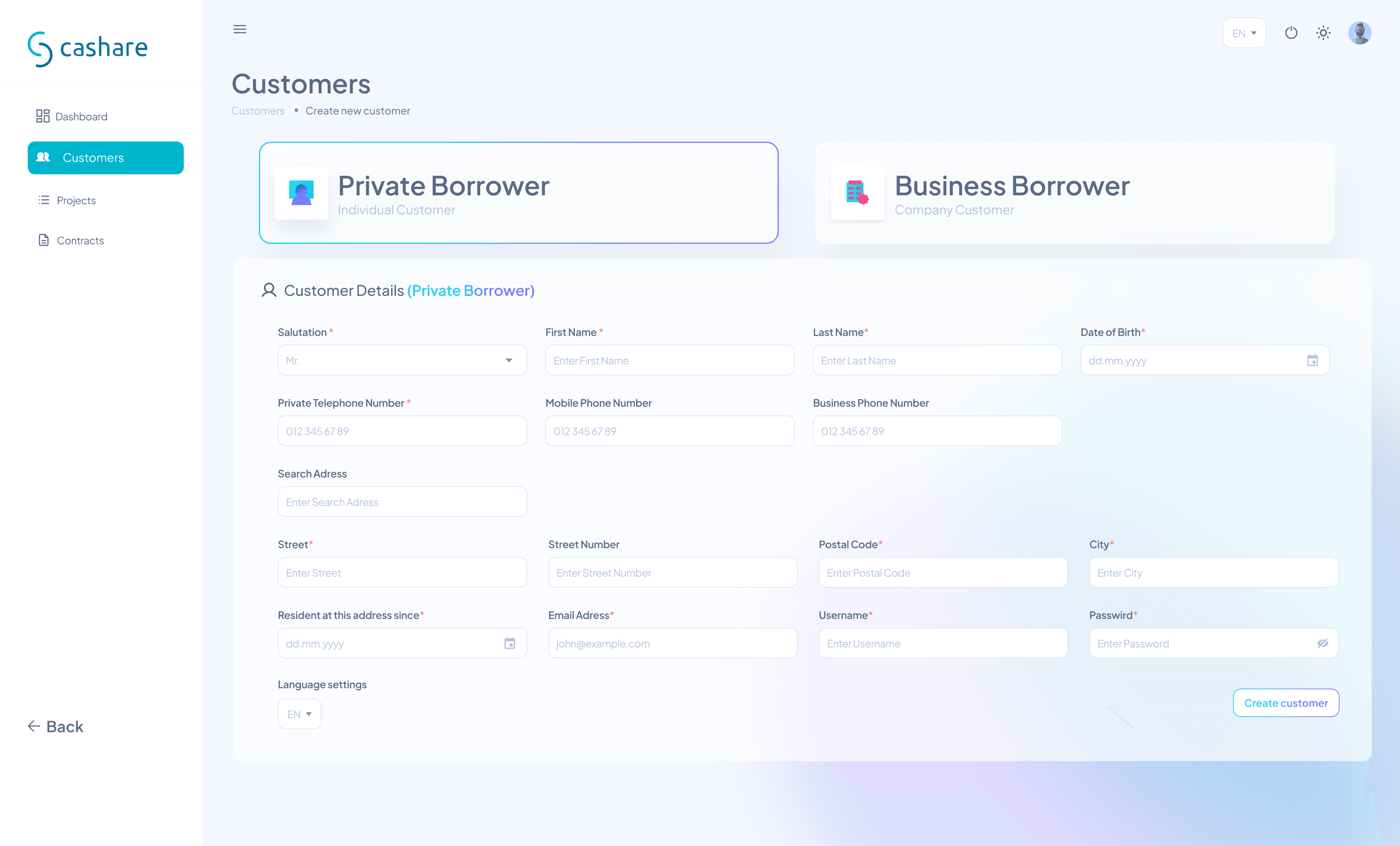
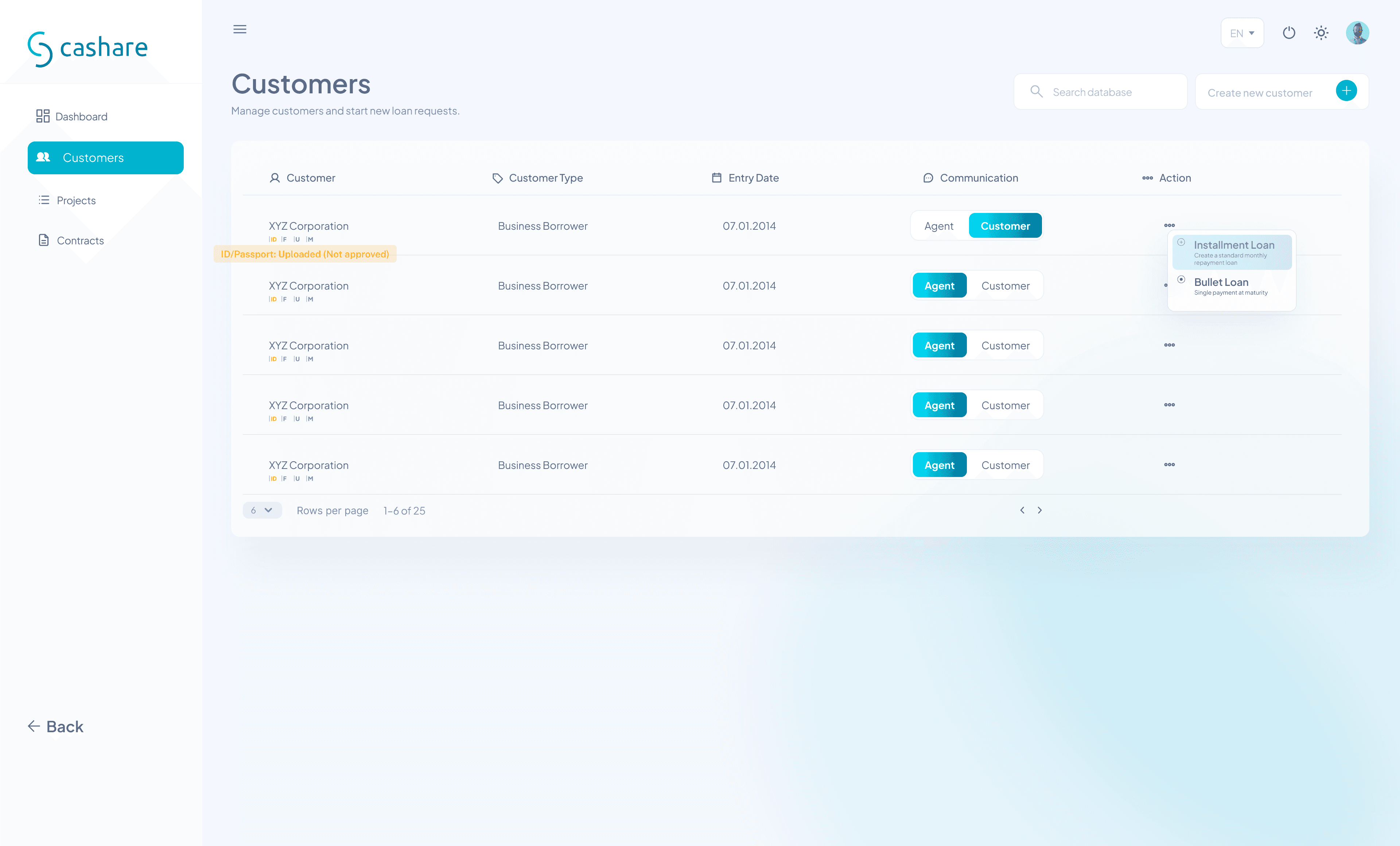
I spent time figuring out what an agent's day actually looks like. Not the polished version anyone would pitch in a meeting, the real one. The one where you're on the phone with a client, looking up their file, checking if their ID got approved, starting a new loan request, and remembering that one repayment thing from last week, all in the same ten minutes. That's the rhythm I was designing for.
The Agent Portal came out of that. One place where agents can see how their month is going, manage their clients, track projects, and handle contracts without bouncing between tools. I wanted it to feel calm. Loan work is already stressful enough without a screen yelling at you.
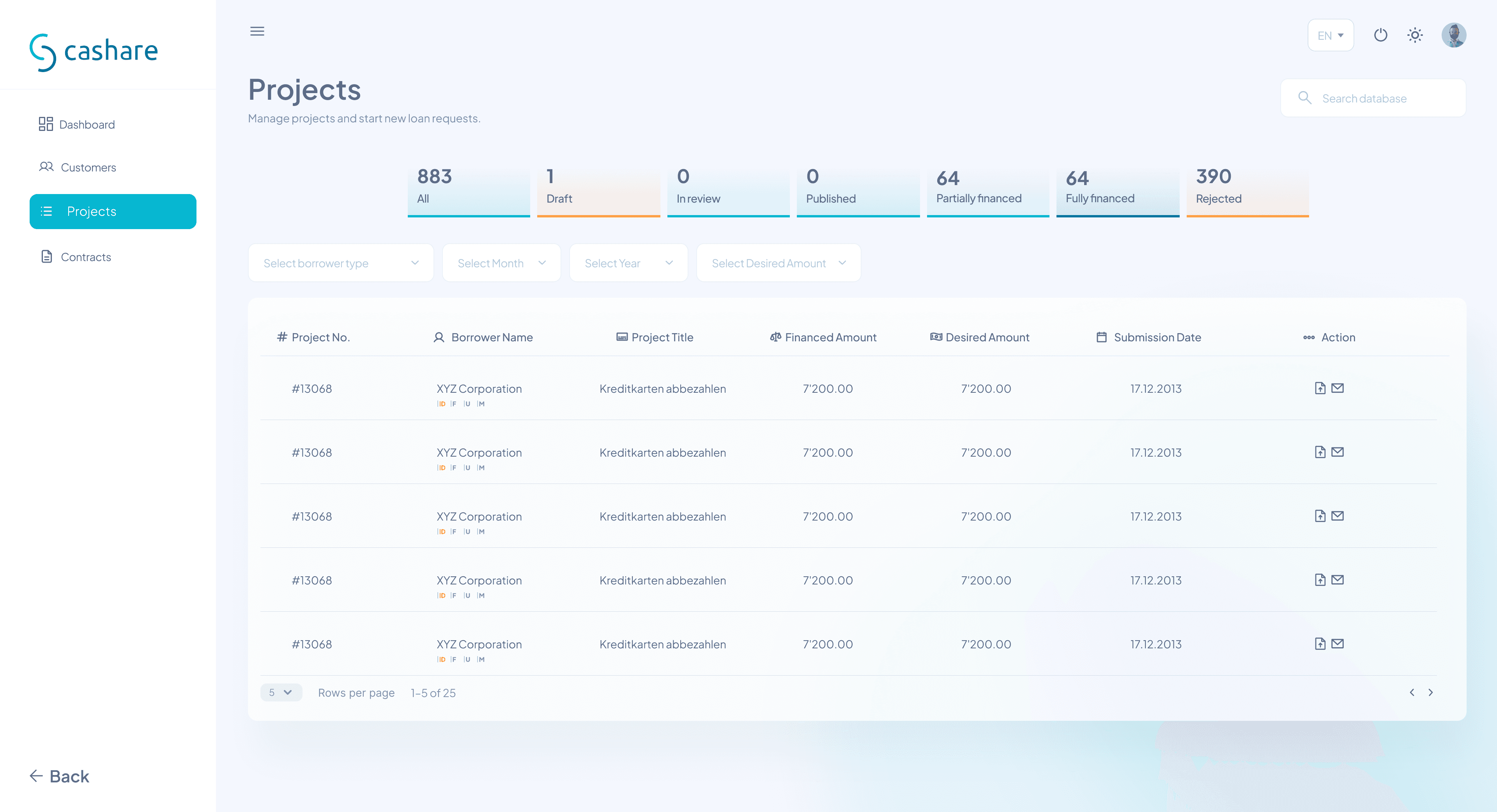
The hardest part wasn't the visuals, it was deciding what not to show. Dashboards love to throw every number at you at once. I kept asking, "would an agent actually use this in their day?" If the answer was no, it didn't make the cut. What's left is a small set of things that actually matter, laid out so you can read them in a glance.
The brand teal does a lot of quiet work here. It only shows up where something is interactive or important. Everything else stays soft, so your eye knows exactly where to land. No gradient parties. No 14 different shades of blue fighting each other.
By the end, the Agent Portal stopped feeling like a tool agents had to use. It started feeling like the tab they open first in the morning, on purpose.
That was the goal the whole time.
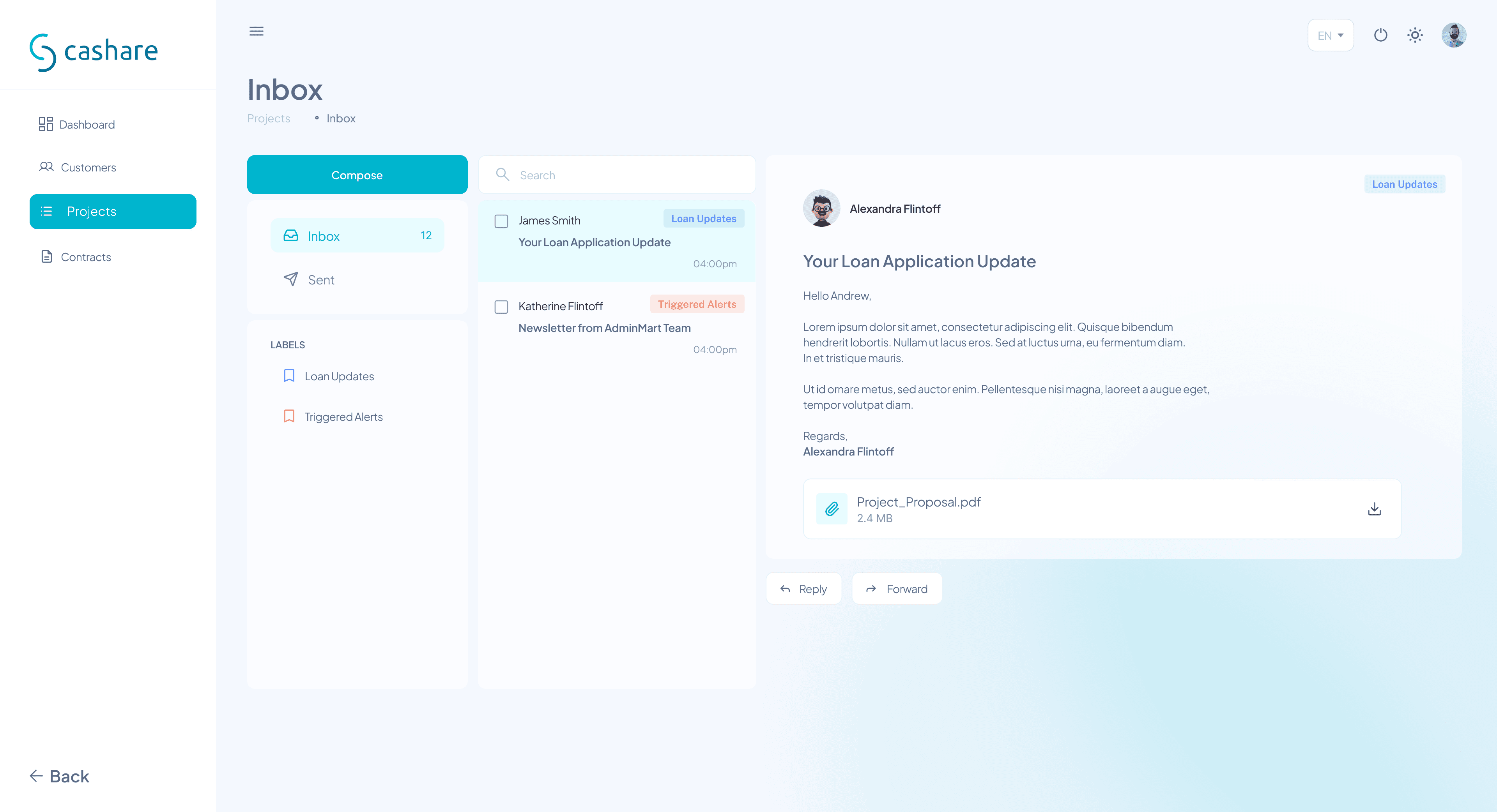
One of the things that came up early was how much agents talk to clients. Calls, follow-ups, document chases, the "did you ever send me that ID?" loop. Most of it was happening outside the portal in personal email or messaging apps, which meant nothing was tracked, nothing was searchable, and nobody could pick up where someone else left off.
So we built the Inbox right into the portal.
The idea was simple: keep client conversations in the same place agents are already managing those clients. If you're looking at someone's loan file, their messages are one click away. If a client replies, it lands here, not in some forgotten Outlook folder. Labels keep things sorted between loan updates and triggered alerts, so an agent can tell at a glance whether something is routine or actually needs attention.
I kept the layout familiar on purpose. Agents already know how an inbox works, there's no reason to reinvent that. What's different is how it fits into the rest of the portal. It's not a separate tool, it's part of the same workspace, with the same calm visual language. Same teal for the things you can act on, same soft background, same quiet rhythm.
The result is that client communication finally has a home. Nothing gets lost in someone's personal email, handovers between agents stop being a guessing game, and the work that used to live in twelve places now lives in one.